The word candle comes from the Latin candere, to shine. For thousands of years, if you wanted light after sunset, you made it yourself.
Reeds, fat and a wick
The earliest lights in Egypt were rushlights: the soft core of a reed, soaked in melted animal fat. They burned, but they had no wick. The Romans are usually credited with the true wicked candle, made by dipping rolled papyrus again and again in melted tallow or beeswax.
Other places worked it out their own way. In China, early candles were moulded in paper tubes with rolled rice paper for a wick. In Japan, wax came from tree nuts. In India, it came from boiling the fruit of the cinnamon tree.
For most of history, staying up after dark meant making your own light.
Smoky tallow, sweet beeswax
For centuries most European candles were tallow, made from animal fat. It was cheap, but it smoked and it smelled. Beeswax burned clean and bright with a sweet scent, so it was kept for churches and the wealthy.
Candle making became a trade. By the 1200s chandlers had guilds in England and France, and some went house to house, turning a family's saved kitchen fat into candles.
Machines and new waxes
The 1800s changed everything. In 1834, an inventor named Joseph Morgan built a machine that helped turn candles into an industry. In the 1850s, James Young worked out how to make paraffin wax from coal and oil shale, and candles became cheap enough for everyone. Then, in 1879, the light bulb arrived, and candles stopped being something you needed.
From need to joy
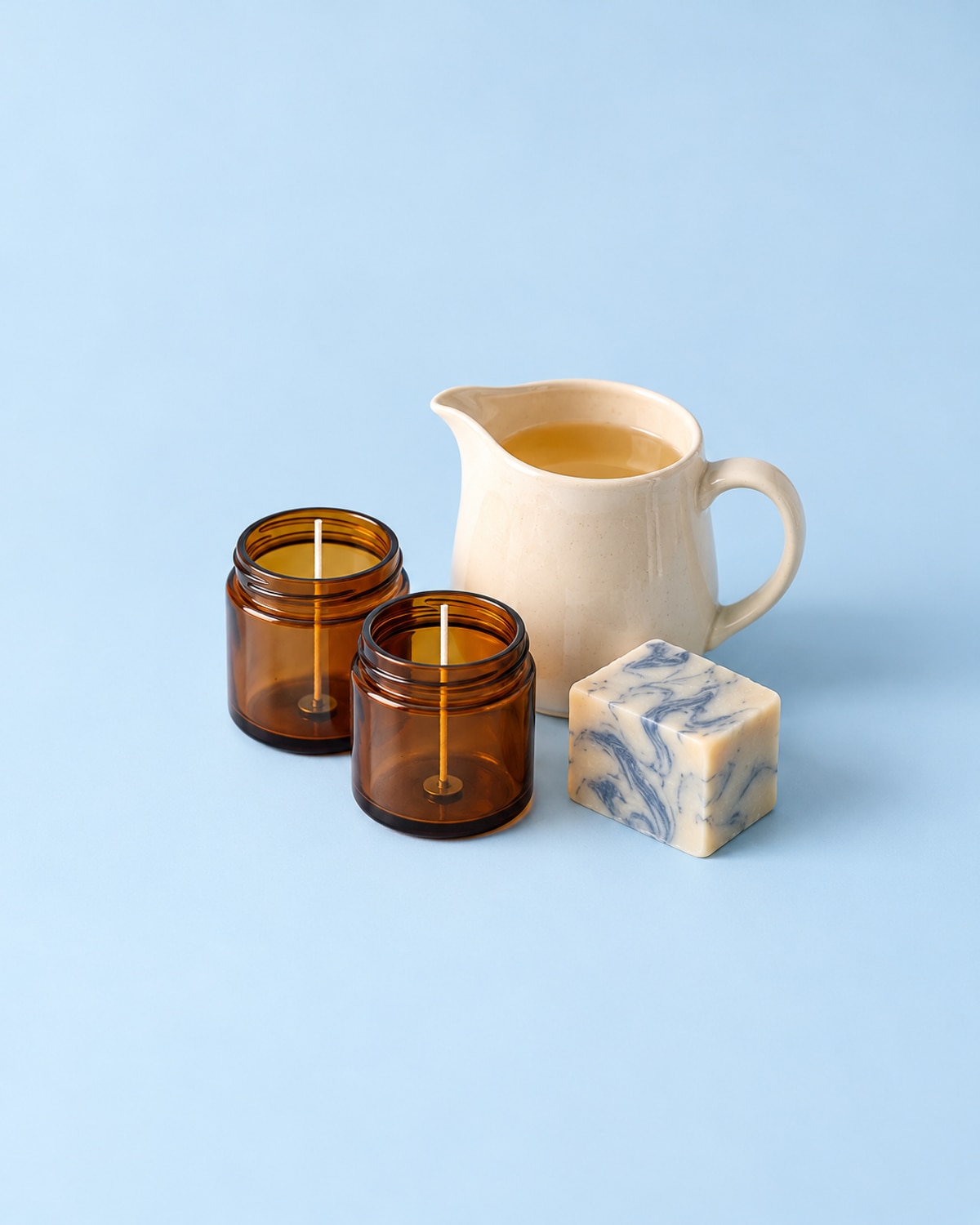
That's when candles became something we choose. Since the 1980s they've been about colour, scent, gifts and mood. Today, small studios pour, dip and roll candles by hand, and the oldest tricks still work: dip a wick in wax, let it cool, dip it again.
Sources
National Candle Association: history of candles (candles.org)
Wikipedia: Candle, and History of candle making