
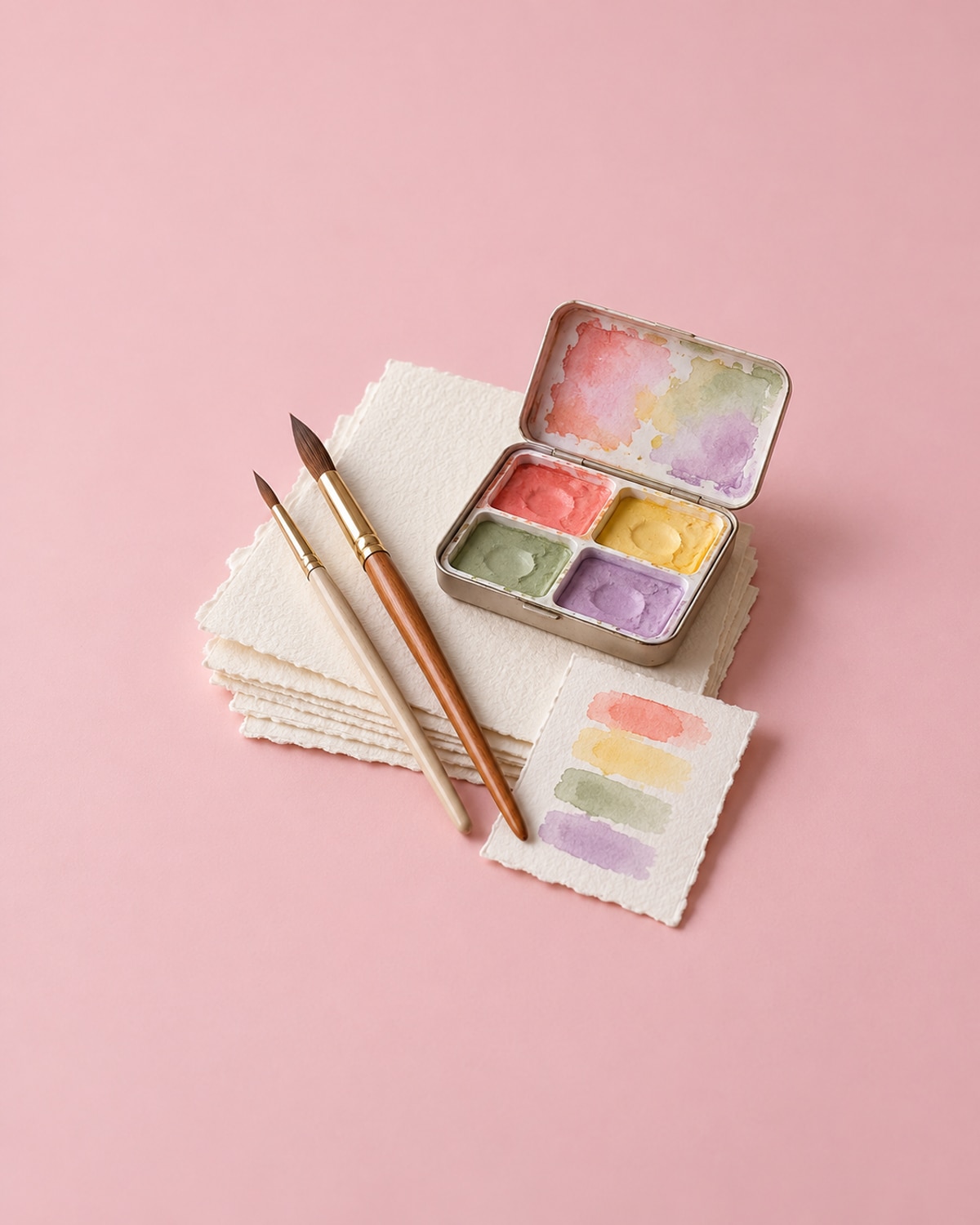
Pick up a sheet of paper and you're holding one of the oldest recipes in the world. It started with scraps.
Rags, bark and fishing nets
In 105 CE, a court official in Han dynasty China named Cai Lun showed the emperor a new way to make a writing sheet. He took the bark of trees, leftover hemp, old rags and worn out fishing nets, and turned them into paper. The emperor praised him, and people came to call it "the paper of Marquis Cai".
Cai Lun probably wasn't the first. Archaeologists have found paper in China from about 200 years earlier. What he did was take a rough idea and make it work well, cheaply and at scale. By the third century, paper was everywhere in China.
Paper began as rags, bark and old fishing nets, beaten into something new.
How it was made
The recipe is simple, and it hasn't changed much. Boil the fibres. Beat them into a mash. Stir the mash into water, then lift it out on a fine screen so a thin layer of fibres is left behind. Press it, dry it, and you have a sheet.
Paper's long road
About 610: papermaking reaches Japan, after Korea.
751: the story goes that papermakers captured at the Battle of Talas set up the first paper mill in Samarkand. Samarkand paper was called kagaz, a word still used for paper from Turkey to India. Historians now think paper reached Samarkand decades earlier, but the story stuck.
793: a paper mill is working in Baghdad. Damascus goes on to supply Europe for centuries.
Around 1056 to 1150: the first paper mills in Europe open at Xàtiva, in Spain.
1255: paper is made in Genoa, Italy. By 1300, European makers are adding watermarks.
Still made by hand
In Japan, washi is still made the old way from the inner bark of kozo, the paper mulberry. In November 2014, UNESCO listed the craft of three Japanese papers as cultural heritage of humanity: Sekishu-banshi from Shimane, Hon-minoshi from Gifu and Hosokawa-shi from Saitama.
That's the thread running through BLOOM too. The best things are still made by people who learned from people. When you buy handmade paper, a card or a print from a small shop, you're part of a recipe almost 2,000 years old.
Sources
Britannica, Cai Lun (britannica.com/biography/Cai-Lun)
Oxford, Cabinet: Origins of paper (cabinet.ox.ac.uk)
Georgia Tech Paper Museum: The birth of papermaking (paper.gatech.edu)
British Association of Paper Historians: early history of paper, and first European mills by country (baph.org.uk)
History of Information: paper after the Battle of Talas (historyofinformation.com)
Qalam: the story of Samarkand paper (qalam.global)
Nippon.com: washi and the UNESCO listing (nippon.com)